Open Access Week 2025: Who owns our knowledge?

Today marks the beginning of International Open Access Week, which this year coincides with Independent Learning Week at the University of St Andrews. As students and staff take a week to gather up and build on all that they’ve learned and taught so far, I want to suggest giving some thought to open access this week as well, either by digging into some of the learning opportunities we offer through resources and workshops, or by reflecting on this year’s theme: Who owns our knowledge?
Who owns our knowledge?
We are aware of new practices appearing in the process of publishing scholarly materials, sometimes as early as when submitting an article to a prominent publisher.
While going through submission forms, authors may notice that a publisher expects them to agree to their research being used to train AI. This is very common now, sometimes as a way for publishers to develop their own systems. There have been instances, however, where authors are not able to even submit an article unless they agree to this.
Over the last few years, the International Open Access Week has built on themes of community over commercialisation, and here we see a potential example in which some publishers are opting to go the other way. This may be seen as useful, depending on the tool or system being developed, but depending on the publisher, it also sparks questions surrounding AI products, academic integrity, and the coercion of researchers to sell their knowledge without much choice.
Open access materials will, by their very nature as freely accessible items, always be used by AI and tech companies. However, materials behind paywalls or logins can also be used by AI through access provided by publishers. Reuse licensing—a key element of open access and rights retention, and which usually requires attribution when used—could at least put this into legal question, though this too is a live topic at Creative Commons.
Nevertheless, the principle of International Open Access Week remains: community over commercialisation. And there are less commercial options at play, including diamond open access and rights retention, which are gaining increasing traction.
The more you know about open access, then, the more we can do to at least try to safeguard our knowledge from manipulation and gatekeeping.
Open access resources
To help you know more about open access, rights retention, and all the different facets along the funding and publishing journey, the open access team has loads of resources available.
You’ll be able to see these this week in International Open Access Week displays at the main library, which shows a whole host of open access material covering the key issues and questions of open access, copyright, knowledge sharing, and more.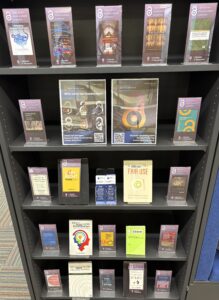
The Open Research team also has numerous training opportunities coming up, including this week’s online Open Access Publishing for Postgraduates course.
We also have dozens of resources online, including:
- A guide to depositing in Pure – download the PDF and save it to your desktop!
- Videos covering types of open access, rights retention, and copyright and licensing
- A detailed list of all our publishing agreements, including instructions on eligibility, links to journal listings, range of charges, and more
- Information on our rights retention strategy
- A collection of Quick Answers featuring some of the most common questions we get at [email protected].
And then, of course, there’s this very blog, on which we’ll be posting throughout the week, covering topics and issues relevant to this week’s theme.
Stay tuned for more, and if you have any questions, don’t hesitate to email us at [email protected].